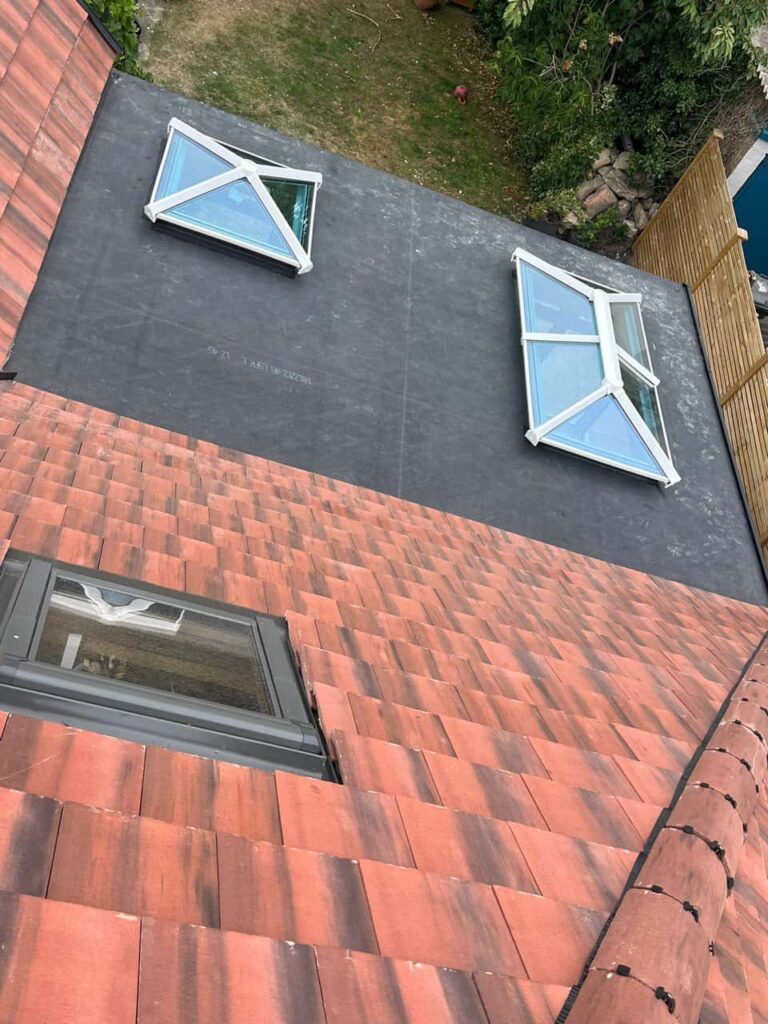
Dealing with one roofing problem is inconvenient enough. When another issue appears shortly afterwards, followed by yet another defect somewhere else, it can begin to feel as though the roof is constantly demanding attention.
A slipped tile may be repaired, only for a leak to develop later. Flashing might then require attention before another section of the roof begins showing signs of deterioration. Although these problems can sometimes be completely separate, repeated defects may also share a common underlying cause.
For homeowners in Bexleyheath, South East London, the important step is to stop looking at every new problem in isolation and consider the condition of the roofing system as a whole. At Bexleyheath Roofing Repairs, a thorough assessment can help determine whether recurring problems are unrelated defects or symptoms of wider deterioration.
Why Do Roofing Problems Sometimes Appear One After Another?
A roof consists of numerous components that have to work together.
Depending on its construction, these may include:
- Tiles or other roof coverings
- Fixings and battens
- Underlay
- Ridge and hip details
- Flashing
- Roof junctions
- Supporting components
Many of these materials have been exposed to similar weather conditions for the same length of time.
As a roof gets older, it is therefore possible for several components to reach a stage of deterioration within a relatively similar period. The problems may appear separately, but their common cause can simply be the broader ageing and weathering of the roof.
General Roof Ageing Can Be the Underlying Factor
An older roof does not automatically need replacing. Many mature roofing systems remain perfectly suitable for professional repair and ongoing maintenance.
However, age becomes more relevant when deterioration starts occurring across several areas.
A tile may become damaged because it has weathered over time. Elsewhere, an ageing fixing may allow another tile to move. Flashing or another roof detail may then develop a weakness after years of exposure.
These are technically different defects, but they may all reflect the same wider issue: several parts of the roof are gradually deteriorating together.
Repeated Slipped Tiles May Indicate More Than Bad Luck
One slipped tile can be an isolated problem.
Several slipped tiles appearing at different times deserve closer investigation.
Roof tiles depend on appropriate support and secure fixing. If multiple tiles begin moving, the condition of the surrounding materials should be considered rather than simply repositioning whichever tile has most recently slipped.
Recurring movement could indicate deterioration involving:
The Tiles Themselves
Older tiles can become increasingly weathered or damaged.
Fixings
Components securing the roof covering may become less dependable.
Supporting Materials
Relevant materials beneath the visible covering may require attention.
Wider Weathering
Several neighbouring sections may have experienced similar long-term deterioration.
Professional assessment can establish whether the latest slipped tile is genuinely isolated or part of a developing pattern.
Recurring Leaks Can Have Different Sources
A recurring leak does not always mean that an earlier repair has failed.
This is particularly important to understand on an ageing roof.
Suppose water ingress caused by damaged flashing is correctly repaired. Several months later, a tile elsewhere deteriorates and allows water to enter through a different section.
To the homeowner, it may appear that “the roof is leaking again”. From a roofing perspective, however, two separate defects may have developed.
When this happens repeatedly, the important question becomes why different sections are becoming vulnerable.
That is where a whole-roof assessment becomes valuable.
Water Can Make the Problem Difficult to Diagnose
Roof leaks can also be misleading because water does not necessarily become visible directly beneath the point where it entered.
Moisture may travel along roofing components before producing an internal stain.
This means repeatedly repairing the area that appears closest to the visible damp does not necessarily identify the true source.
Professional leak investigation should consider the roof above and around the affected area, looking for defects that could realistically explain the water ingress.
Finding the cause is considerably more useful than simply treating the visible symptom.
Previous Repairs Can Reveal an Important Pattern
Having previous repairs on a roof is completely normal.
Individual defects can develop throughout a roof’s service life, and appropriate maintenance can help keep an otherwise sound roofing system performing effectively.
The pattern becomes significant when repairs start appearing across numerous areas within a relatively short period.
For example, a roof may have already required attention to:
- Several sections of tiles
- Ridge areas
- Flashing
- Roof junctions
- Areas affected by water ingress
When another defect appears, looking at this history can help determine whether the latest problem is genuinely isolated.
Could One Underlying Problem Cause Several Symptoms?
Sometimes, yes.
A roofing defect can occasionally create more than one visible symptom.
For example, movement or deterioration in one area could affect the position of roofing materials while also creating a route for water ingress.
Similarly, problems involving a vulnerable roof junction might initially appear as an internal damp patch before more visible deterioration is noticed externally.
This is why diagnosing roofs solely according to the most obvious symptom can be unreliable.
The complete affected area needs to be considered.
Poorly Performing Roof Details Can Create Repeat Problems
Certain parts of a roof contain more complex detailing than broad uninterrupted sections.
Flashing, junctions, ridges, hips and other transitions all have important roles in keeping water out.
If one of these areas has deteriorated significantly, the resulting symptoms may appear in different ways or locations.
A professional inspection should therefore pay attention to these details rather than concentrating exclusively on the main roof covering.
A relatively small defective area can sometimes have a substantial effect on overall roof performance.
Weather Can Expose Existing Weaknesses
Difficult weather does not always create a roofing defect from nothing.
Sometimes it reveals deterioration that was already developing.
An ageing fixing may remain in position during ordinary conditions but become less dependable when exposed to stronger winds. A weathered tile may continue functioning until further exposure causes it to crack or move.
When several roofing components are already approaching a vulnerable condition, periods of challenging weather can therefore result in multiple problems becoming noticeable within a shorter timeframe.
The weather may be the trigger, while age-related deterioration is the underlying factor.
When Are Separate Roof Repairs Still the Right Approach?
Several roofing defects do not automatically mean that extensive work is required.
If the problems are genuinely localised and the remainder of the roof is in suitable condition, professional repairs may remain entirely appropriate.
This might be the case where:
- Damage affects only limited areas
- Most roof coverings remain sound
- Underlying components are in suitable condition
- The source of each problem can be clearly identified
- Previous repairs remain effective
- There is no evidence of widespread deterioration
The purpose of professional assessment is not to turn every recurring problem into a larger project. It is to determine what the roof genuinely needs.
When Should You Start Looking at the Bigger Picture?
A broader inspection becomes increasingly important when the pattern changes from occasional maintenance to frequent problems.
Warning signs can include:
- Leaks developing in different locations
- Tiles repeatedly slipping or breaking
- Several roof details deteriorating together
- Repairs becoming increasingly frequent
- New problems appearing soon after unrelated repairs
- Widespread weathering of the roof covering
- Numerous previous repaired sections
- Different parts of the roof showing similar deterioration
None of these signs individually proves that the complete roof has reached the end of its useful condition.
Together, however, they can justify a much more comprehensive assessment.
Is the Latest Problem Really the Most Important One?
Not necessarily.
If another tile has just slipped, that may be the most visible concern today. But if the roof has experienced several leaks, numerous displaced tiles and repeated repairs over recent years, the broader pattern may be more important than the individual tile.
This distinction helps homeowners avoid becoming trapped in a purely reactive approach.
Rather than asking only, “How do we repair this problem?”, it can be more useful to ask, “Why does this roof keep developing problems?”
The answer can lead to a more appropriate long-term solution.
Why Professional Roof Inspection Matters
Diagnosing recurring roofing problems requires more than identifying obvious damage from ground level.
An experienced roofer can assess relevant parts of the roofing system and consider how individual defects relate to one another.
A professional assessment may consider:
Overall Roof Covering
Are defects isolated, or are tiles and other materials deteriorating across larger areas?
Fixings and Supporting Components
Could problems beneath the visible covering explain recurring movement?
Flashing and Junctions
Are vulnerable details continuing to provide effective weather protection?
Ridge and Hip Areas
Are these sections secure and in suitable condition?
Evidence of Water Ingress
Can internal symptoms be connected with identifiable external defects?
Previous Repair Areas
Do they suggest a history of isolated maintenance or broader deterioration?
Looking at these factors together creates a much clearer picture of the roof’s condition.
Avoid Repairing Symptoms Without Finding the Cause
A successful roof repair should do more than make the immediate symptom disappear.
If a tile repeatedly slips because of deterioration beneath it, simply putting the tile back does not fully resolve the problem. Similarly, treating internal damp without correcting the route through which water is entering cannot protect the roof.
Effective roofing work begins with diagnosis.
Once the underlying cause has been established, the repair can be designed around correcting the actual defect rather than temporarily disguising its consequences.
Does Repeated Repair Mean the Roof Needs Replacing?
Not automatically.
Some roofs experience several unrelated problems while remaining fundamentally sound. In those situations, targeted repairs can continue to be an appropriate approach.
Replacement becomes more relevant when deterioration is widespread and multiple components are becoming unreliable across the roofing system.
The decision should therefore be based on condition rather than simply counting how many repairs have previously been completed.
For homeowners in Bexleyheath, professional assessment provides the clearest way of distinguishing between a repairable roof with several isolated defects and a roofing system experiencing more general deterioration.
The Value of Taking a Whole-Roof Approach
When roofing problems become repetitive, inspecting the complete system can provide valuable clarity.
It may reveal that one underlying weakness is responsible for several symptoms. Alternatively, it may show that different components are deteriorating independently because the roof has reached a more advanced stage of weathering.
Either finding is useful.
The first allows the underlying defect to be properly addressed. The second helps homeowners understand why isolated problems continue appearing and what form of roofing work is most appropriate.
Professional Roof Repairs in Bexleyheath
At Bexleyheath Roofing Repairs, we provide professional roofing services for properties in Bexleyheath, South East London.
When a roof develops repeated problems, our approach is to consider both the immediate defect and the wider condition of the roofing system. Where the issue is genuinely localised, targeted repairs may provide an effective solution. Where several defects indicate broader deterioration, a more comprehensive assessment can help establish the appropriate way forward.
The objective is straightforward: identify why the roofing problem is occurring and recommend work that addresses the actual cause.
Conclusion
When a roof develops one problem after another, there may be a common cause. Long-term weathering, ageing tiles, deteriorating fixings, vulnerable roof details and problems with underlying components can all result in separate defects appearing at different times.
However, repeated problems do not automatically mean that a roof requires complete replacement. Many defects can still be addressed effectively through professional repairs when the wider roofing system remains in suitable condition.
The important step is recognising when problems have stopped being isolated and started forming a pattern.
If your property in Bexleyheath, South East London, seems to be experiencing recurring roof leaks, slipped tiles or other repeated defects, contact Bexleyheath Roofing Repairs. We can assess the roofing system, identify the likely underlying cause and recommend the most appropriate professional repair solution.
Call us on: 0208 103 9770
Click here to find out more about Bexleyheath Roofing Repairs
Click here to complete our contact form and see how we can help with your roofing needs